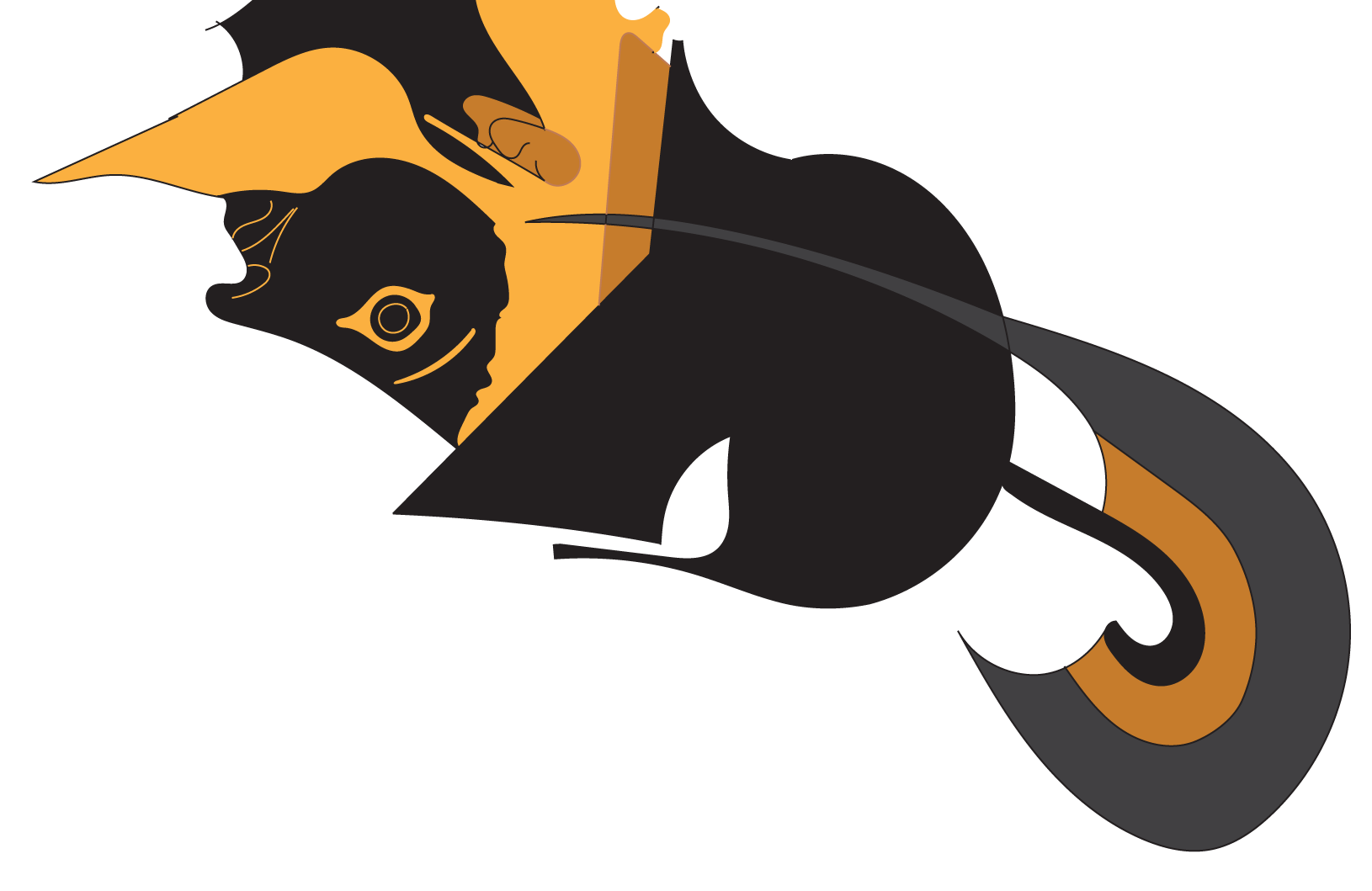
Perde 1
[Textpart 1]
Well—do I now convince you by my proofs that you are not Sosia?
SOSIA
Do you deny that I am?
MERCURY
Why should I not deny it, who am he myself?
SOSIA
By Jupiter I swear that I am he, and that I do not say false.
435
MERCURY
But by Mercury, I swear that Jupiter does not believe you; for I am sure that he will rather credit me without an oath than you with an oath.
SOSIA
Who am I, at all events, if I am not Sosia? I ask you that.
MERCURY
When I choose not to be Sosia, then do you be Sosia; now, since I am he, you’ll get a thrashing, if you are not off hence, you fellow without a name.
SOSIA
Upon my faith, for sure, when I examine him and recollect my own figure, just in such manner as I am (I’ve often looked in a glassLooked in a glass: He seems to speak of looking in a mirror as something uncommon for a slave to do. Probably the expense of them did not allow of their being used by slaves. The specula, or looking-glasses, of the ancients, were usually made of metal, either a composition of tin and copper or of silver; but in later times, alloy was mixed with the silver. Pliny mentions the obsidian stone, or, as it is now called, Icelandic agate, as being used for this purpose. He also says that mirrors were made in the glass-houses of Sidon, which consisted of glass plates with leaves of metal at the back. These were probably of an inferior character. Those of copper and tin were made chiefly at Brundisium. The white metal formed from this mixture soon becoming dim, a sponge, with powdered pumice-stone, was usually fastened to the mirrors made of that composition. They were generally small, of round or oval shape, and having a handle. The female slaves usually held them while their mistresses were performing the duties of the toilet. Sometimes they were fastened to the walls, and they were occasionally of the length of a person’s body, like the cheval glasses of our day):, he is exactly like me. He has the broad-brimmed hat and clothing just the same; he is as like me as I am myself. His leg, foot, stature, shorn head, eyes, nose, even his lips,
cheeks, chin, beard, neck—the whole of him. What need is there of words? If his back is marked with scars, than this likeness there is nothing more like. But when I reflect, really, I surely am the same person that I always was. My master I know, I know our I house; I am quite in my wits and senses. I’m not going to I obey this fellow in what he says; I’ll knock at the door.
445
MERCURY
Whither are you betaking yourself?
450
MERCURY
If now you were to ascend the chariot of Jove and fly away from here, then you could hardly be able to escape destruction.
450
SOSIA
Mayn’t I be allowed to deliver the message to my mistress that my master ordered me to give?
MERCURY
If you want to deliver any message to your own mistress; this mistress of mine I shall not allow you to approach. But if you provoke me, you’ll be just now taking hence your loins broken.
SOSIA
In preference, I’ll be off. (Aside.) Immortal Gods, I do beseech your mercy. Where did I lose myself? Where have I been transformed? Where have I parted with my figure? Or have I left myself behind there, if perchance I have forgotten it? For really this person has possession of all my figure, such as it formerly was. While living, that is done for me, which no one will ever do for me when deadWhen dead: It is generally thought that he is punning here upon the word imago, and alludes to the practice of carrying the imagines, or waxen images of their ancestors, in the funeral processions of the Patricians—an honor, he says, that will never befall him when he is dead. Douza, however, thinks that he is playing upon the expression ludos facere, which has the double meaning of to impose upon a person, or to give a spectacle of gladiators after the death of a person of Patrician rank; and that he means to say that the act ludos faciendi is being applied to him (in the first sense): while alive, a thing that (in the second sense) will never befall him when dead..
455
I’ll go to the harbour, and I’ll tell my master these things as they have happened—unless even he as well shall not know me, which may Jupiter grant, so that this day, bald, with shaven crown, I may assume the cap of freedomCap of freedom: When a slave was made free, after his manumission his head was shaved, and a cap put upon it in the Temple of Feronia, the Goddess of Freedmen..
460
[Textpart 2]
Well and prosperously has this affair gone on for me; from the door have I removed the greatest obstacle,
MERCURY
so that it may be allowed my father to embrace her in security. When now he shall have reached his master, Amphitryon there, he will say that the servant Sosia has repulsed himself from the door here; and then the other will suppose that he is telling him a lie, and will not believe that he has come here as he had ordered him.
465
Both of them and the whole household of Amphitryon I will fill with mistakes and distraction, even until my father shall have had full enjoyment of her whom he loves; then at last all shall know what has been done. In the end Jupiter shall restore Alcmena
470
to the former affection of her husband. For Amphitryon will just now be beginning a quarrel with his wife, and will be accusing her of incontinence; then will my father change for her this strife into tranquillity. Now, inasmuch as yet I’ve said but little about Alcmena,
475