Thesauros Literature History Ἱστορίαι

Ἱστορίαι

Ἱστορίαι Herodotus

Book 4

 
After taking Babylon [44.4,32.55] (deserted settlement), Babil, Iraq, Asia Babylon , Darius himself marched against the Scythians. For since Asia (continent) Asia was bursting with men and vast revenues were coming in, Darius desired to punish the Scythians for the wrong they had begun when they invaded Media first and defeated those who opposed them in battle.
 
For the Scythians, as I have said before, ruled upper Asia (continent) Asia That is, the eastern highlands of the Persian empire. for twenty-eight years; they invaded Asia (continent) Asia in their pursuit of the Cimmerians, and ended the power of the Medes, who were the rulers of Asia (continent) Asia before the Scythians came.
 
But when the Scythians had been away from their homes for twenty-eight years and returned to their country after so long an absence, as much trouble as their Median war awaited them. They found themselves opposed by a great force; for the Scythian women, when their husbands were away for so long, turned to their slaves.
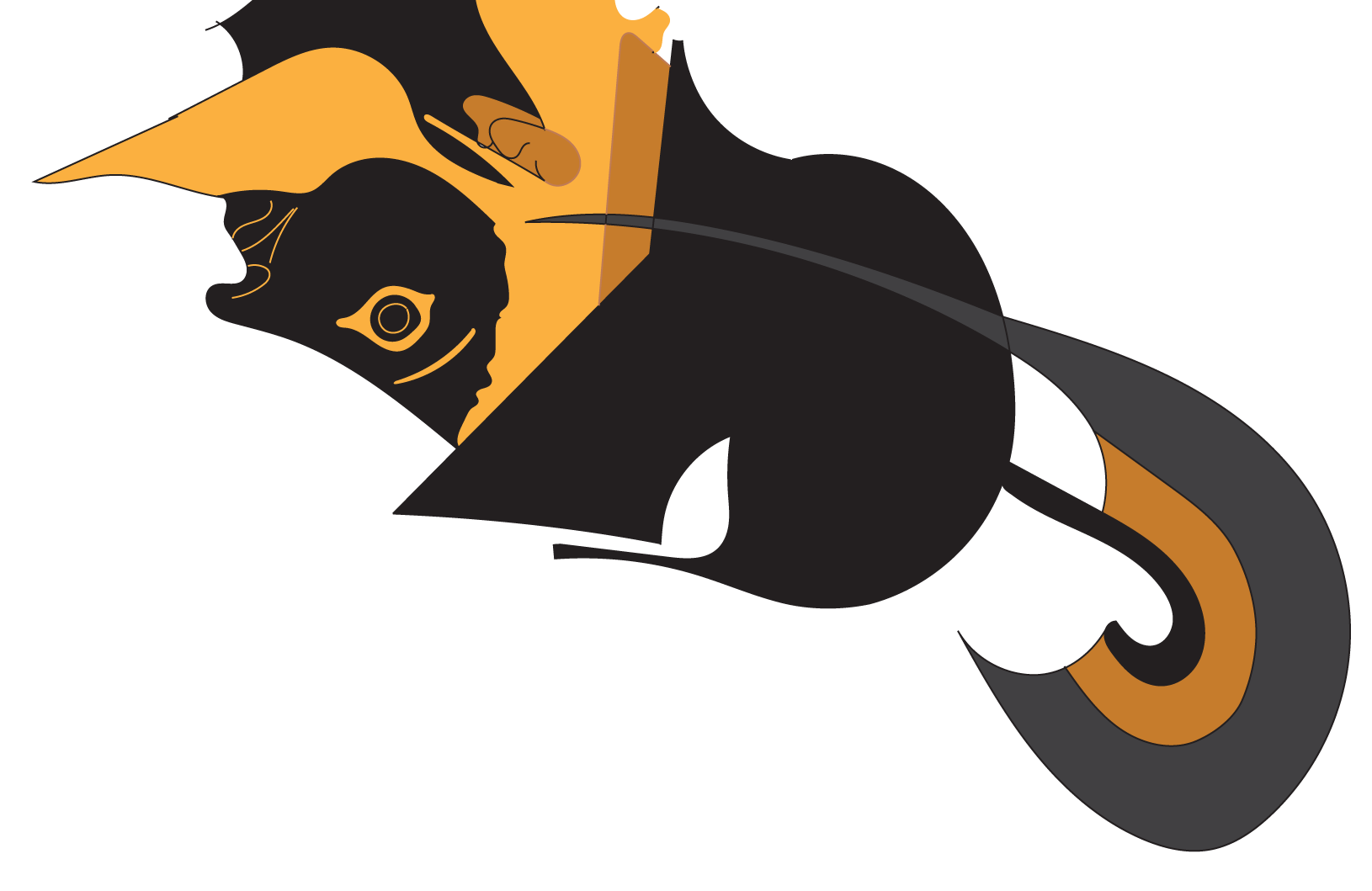
 
Now the Scythians blind all their slaves, because of the milk Herodotus means that the slaves are blinded to prevent them stealing the best of the milk. Probably the story of blind slaves arises from some Scythian name for slaves, misunderstood by the Greeks. they drink; and this is how they get it: taking tubes of bone very much like flutes, they insert these into the genitalia of the mares and blow into them, some blowing while others milk. According to them, their reason for doing this is that blowing makes the mare's veins swell and her udder drop.
 
When done milking, they pour the milk into deep wooden buckets, and make their slaves stand around the buckets and shake the milk; they draw off what stands on the surface and value this most; what lies at the bottom is less valued. This is why the Scythians blind all prisoners whom they take: for they do not cultivate the soil, but are nomads.
 
So it came about that a younger generation grew up, born of these slaves and the women; and when the youths learned of their parentage, they came out to fight the Scythians returning from Media.
 
First they barred the way to their country by digging a wide trench from the Tauric mountains to the broadest part of the Maeetian lake;The Sea of Azov . It is not clear where the τάφρος was. Some think that Herodotus may have had in his mind the so-called “Putrid Sea,” the narrow stretch of water between the Arabat isthmus and the +Krym [34,45] (autonomous republic), Ukraine, Europe Crimea . This at least corresponds with the “point of greatest breadth” of the Sea of +Azov [39.433,47.1] (inhabited place), Rostov, Rossiya, Russia, Asia Azov . and then, when the Scythians tried to force a passage, they camped opposite them and engaged them in battle.
 
There were many fights, and the Scythians could gain no advantage; at last one of them said, “Men of Scythia (region (general)), Asia Scythia , look at what we are doing! We are fighting our own slaves; they kill us, and we grow fewer; we kill them, and shall have fewer slaves.
 
Now, then, my opinion is that we should drop our spears and bows, and meet them with horsewhips in our hands. As long as they see us armed, they imagine that they are our equals and the sons of our equals; let them see us with whips and no weapons, and they will perceive that they are our slaves; and taking this to heart they will not face our attack.”
 
The Scythians heard this and acted on it; and their enemies, stunned by what they saw, did not think of fighting, but fled. Thus, the Scythians ruled Asia (continent) Asia and were driven out again by the Medes, and returned to their own country in such a way. Desiring to punish them for what they had done, Darius assembled an army against them.
 
The Scythians say that their nation is the youngest in the world, and that it came into being in this way. A man whose name was Targitaüs appeared in this country, which was then desolate. They say that his parents were Zeus and a daughter of the Borysthenes river (I do not believe the story, but it is told).The +Dnepr (river), Europe Dnieper .
 
Such was Targitaüs' lineage; and he had three sons: Lipoxaïs, Arpoxaïs, and Colaxaïs, youngest of the three.
 
In the time of their rule (the story goes) certain implements—namely, a plough, a yoke, a sword, and a flask, all of gold—fell down from the sky into Scythia (region (general)), Asia Scythia . The eldest of them, seeing these, approached them meaning to take them; but the gold began to burn as he neared, and he stopped.
 
Then the second approached, and the gold did as before. When these two had been driven back by the burning gold, the youngest brother approached and the burning stopped, and he took the gold to his own house. In view of this, the elder brothers agreed to give all the royal power to the youngest.
 
Lipoxaïs, it is said, was the father of the Scythian clan called Auchatae; Arpoxaïs, the second brother, of those called Katiari and Traspians; the youngest, who was king, of those called Paralatae.
 
All these together bear the name of Skoloti, after their king; “Scythians” is the name given them by Greeks. This, then, is the Scythians' account of their origin,
 
and they say that neither more nor less than a thousand years in all passed from the time of their first king Targitaüs to the entry of Darius into their country. The kings guard this sacred gold very closely, and every year offer solemn sacrifices of propitiation to it.
 
Whoever falls asleep at this festival in the open air, having the sacred gold with him, is said by the Scythians not to live out the year; for which reasonThe “reason” is obscure; perhaps the gift of land is a compensation for his shortness of life. (they say) as much land as he can ride round in one day is given to him. Because of the great size of the country, the lordships that Colaxaïs established for his sons were three, one of which, where they keep the gold, was the greatest.
 
Above and north of the neighbors of their country no one (they say) can see or travel further, because of showers of feathers;See Hdt. 4.31 for Herodotus' explanation. for earth and sky are full of feathers, and these hinder sight.
 
This is what the Scythians say about themselves and the country north of them. But the story told by the Greeks who live in +Black Sea [38,42] (sea) Pontus is as follows. Heracles, driving the cattle of Geryones, came to this land, which was then desolate, but is now inhabited by the Scythians.
 
Geryones lived west of the +Black Sea [38,42] (sea) Pontus ,Very far west, Gadira being identified with Cadiz . settled in the island called by the Greeks Erythea, on the shore of Ocean near Gadira, outside the pillars of Heracles. As for Ocean, the Greeks say that it flows around the whole world from where the sun rises, but they cannot prove that this is so.
 
Heracles came from there to the country now called Scythia (region (general)), Asia Scythia , where, encountering wintry and frosty weather, he drew his lion's skin over him and fell asleep, and while he slept his mares, which were grazing yoked to the chariot, were spirited away by divine fortune.
 
When Heracles awoke, he searched for them, visiting every part of the country, until at last he came to the land called the Woodland, and there he found in a cave a creature of double form that was half maiden and half serpent; above the buttocks she was a woman, below them a snake.
 
When he saw her he was astonished, and asked her if she had seen his mares straying; she said that she had them, and would not return them to him before he had intercourse with her; Heracles did, in hope of this reward.
 
But though he was anxious to take the horses and go, she delayed returning them, so that she might have Heracles with her for as long as possible; at last she gave them back, telling him, “These mares came, and I kept them safe here for you, and you have paid me for keeping them, for I have three sons by you.
 
Now tell me what I am to do when they are grown up: shall I keep them here (since I am queen of this country), or shall I send them away to you?” Thus she inquired, and then (it is said) Heracles answered:
 
“When you see the boys are grown up, do as follows and you will do rightly: whichever of them you see bending this bow and wearing this belt so, make him an inhabitant of this land; but whoever falls short of these accomplishments that I require, send him away out of the country. Do so and you shall yourself have comfort, and my will shall be done.”
 
So he drew one of his bows (for until then Heracles always carried two), and showed her the belt, and gave her the bow and the belt, that had a golden vessel on the end of its clasp; and, having given them, he departed. But when the sons born to her were grown men, she gave them names, calling one of them Agathyrsus and the next Gelonus and the youngest Scythes; furthermore, remembering the instructions, she did as she was told.
 
Two of her sons, Agathyrsus and Gelonus, were cast out by their mother and left the country, unable to fulfill the requirements set; but Scythes, the youngest, fulfilled them and so stayed in the land.
 
From Scythes son of Heracles comes the whole line of the kings of Scythia (region (general)), Asia Scythia ; and it is because of the vessel that the Scythians carry vessels on their belts to this day. This alone his mother did for Scythes. This is what the Greek dwellers in +Black Sea [38,42] (sea) Pontus say.
 
There is yet another story, to which account I myself especially incline. It is to this effect. The nomadic Scythians inhabiting Asia (continent) Asia , when hard pressed in war by the Massagetae, fled across the Araxes Herodotus' idea of the course of this river is uncertain; cp. Hdt. 1.202. He appears to extend the Araxes, which flowed from the west into the Caspian, into regions east of that sea. river to the Cimmerian country (for the country which the Scythians now inhabit is said to have belonged to the Cimmerians before),
 
and the Cimmerians, at the advance of the Scythians, deliberated as men threatened by a great force should. Opinions were divided; both were strongly held, but that of the princes was the more honorable; for the people believed that their part was to withdraw and that there was no need to risk their lives for the dust of the earth; but the princes were for fighting to defend their country against the attackers.
 
Neither side could persuade the other, neither the people the princes nor the princes the people; the one party planned to depart without fighting and leave the country to their enemies, but the princes were determined to lie dead in their own country and not to flee with the people, for they considered how happy their situation had been and what ills were likely to come upon them if they fled from their native land.
 
Having made up their minds, the princes separated into two equal bands and fought with each other until they were all killed by each other's hands; then the Cimmerian people buried them by the Tyras river, where their tombs are still to be seen, and having buried them left the land; and the Scythians came and took possession of the country left empty.
 
And to this day there are Cimmerian walls in Scythia (region (general)), Asia Scythia , and a Cimmerian ferry, and there is a country Cimmeria The name survives in “ +Krym [34,45] (autonomous republic), Ukraine, Europe Crimea .” The “Cimmerian ferry” is probably the narrow entrance of the Sea of +Azov [39.433,47.1] (inhabited place), Rostov, Rossiya, Russia, Asia Azov . and a strait named Cimmerian.
 
Furthermore, it is evident that the Cimmerians in their flight from the Scythians into Asia (continent) Asia also made a colony on the peninsula where the Greek city of +Sinope [35.15,42.0167] (Perseus) Sinope has since been founded; and it is clear that the Scythians pursued them and invaded Media, missing their way;
 
for the Cimmerians always fled along the coast, and the Scythians pursued with the +Bol'soj Kavkaz [46.833,42] (mountain range), Asia Caucasus on their right until they came into the Median land, turning inland on their way. That is the other story current among Greeks and foreigners alike.
 
There is also a story related in a poem by Aristeas son of Caüstrobius, a man of +Marmara Adasi [27.616,40.633] (island), Balikesir, Marmara, Turkey, Asia Proconnesus . This Aristeas, possessed by Phoebus, visited the Issedones; beyond these (he said) live the one-eyed Arimaspians, beyond whom are the griffins that guard gold, and beyond these again the Hyperboreans, whose territory reaches to the sea.
 
Except for the Hyperboreans, all these nations (and first the Arimaspians) are always at war with their neighbors; the Issedones were pushed from their lands by the Arimaspians, and the Scythians by the Issedones, and the Cimmerians, living by the southern sea, were hard pressed by the Scythians and left their country. Thus Aristeas' story does not agree with the Scythian account about this country.
 
Where Aristeas who wrote this came from, I have already said; I will tell the story that I heard about him at +Marmara Adasi [27.616,40.633] (island), Balikesir, Marmara, Turkey, Asia Proconnesus and +Cyzicus [27.9,40.4167] (Perseus) Cyzicus . It is said that this Aristeas, who was as well-born as any of his townsfolk, went into a fuller's shop at +Marmara Adasi [27.616,40.633] (island), Balikesir, Marmara, Turkey, Asia Proconnesus and there died; the owner shut his shop and went away to tell the dead man's relatives,
1 / 15 Next →

nav.navigate

nav.identity

common.settings

common.language
TR EN
common.theme